
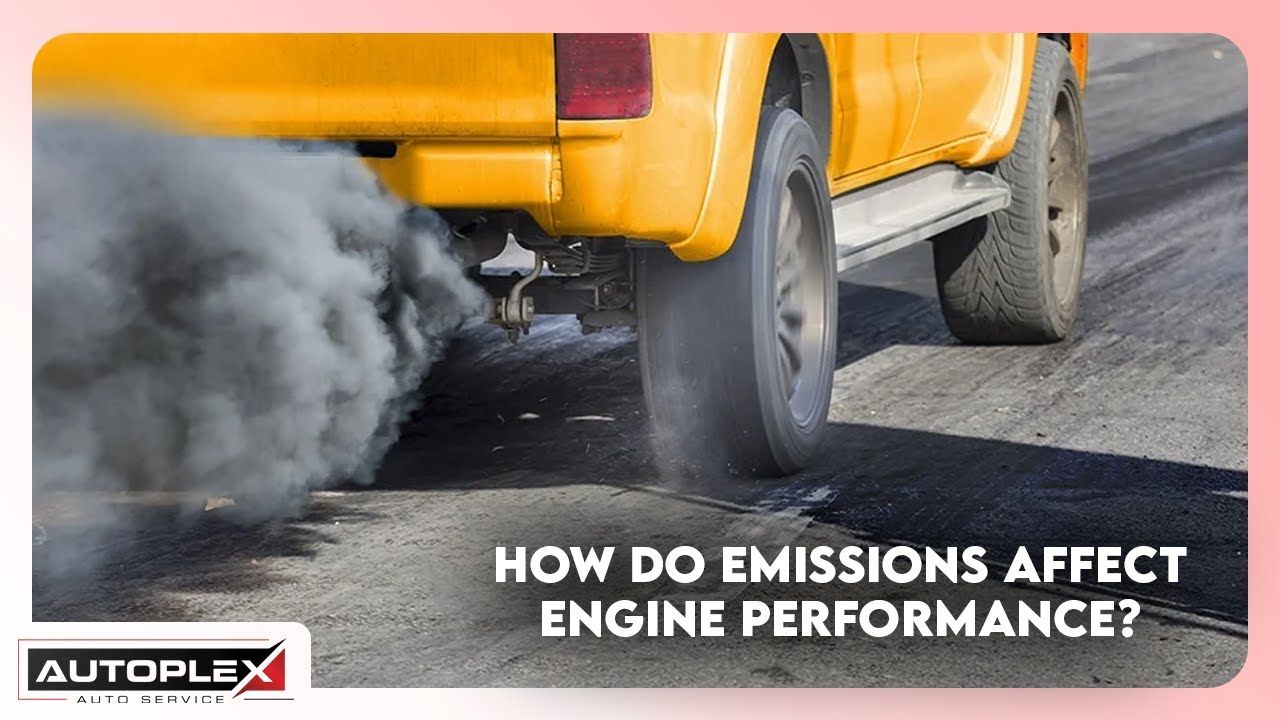
How do vehicle emissions affect engine performance?
How do vehicle emissions affect engine performance?
By Dale, Autoplex Auto Service | Tempe, AZ
Most drivers view the check engine light as a minor annoyance—a small orange glow on the dashboard that they can worry about "later." However, as we often see here at Autoplex Auto Service, ignoring that light can lead to a domino effect that ruins your fuel economy and destroys your horsepower.
Emissions systems are often misunderstood. It isn't just about passing a state inspection; it is about how your engine breathes, burns fuel, and delivers power to the wheels.
The Role of Oxygen Sensors
The first line of defense in your vehicle's performance is the Oxygen Sensor (O2 sensor). Modern vehicles rely on these sensors to monitor the exhaust gases.
Your car computer relies on data from two specific points:
- Pre-Converter: Measures the exhaust coming right out of the engine.
- Post-Converter: Measures the exhaust after it has passed through the catalytic converter.
These sensors act as the "eyes" of your engine management system. They tell the computer exactly how much oxygen is left in the exhaust, allowing the car to adjust the air-fuel mixture in real-time.
The Danger of Running "Rich" or "Lean"
When you ignore an emissions-related check engine light, your vehicle often defaults to a "safety" mode because it can no longer trust the sensor data. This usually results in the engine running in one of two harmful states:
- Running Rich: This means the engine is injecting too much fuel. This wastes gas, washes oil off cylinder walls, and dumps raw fuel into the exhaust.
- Running Lean: This means there is too much air and not enough fuel. This causes the engine to run hotter than designed, which can damage internal components.
The Consequence: A Clogged Catalytic Converter
The biggest victim of a poor air-fuel mixture is your catalytic converter.
The "cat" is designed to scrub pollutants, but it is sensitive. If your car is running overly rich, unburnt fuel enters the converter and ignites, causing it to overheat and melt the internal honeycomb structure. Conversely, other contaminants can coat the catalyst, preventing it from working.
Over time, this damage causes the converter to become clogged. Think of it like trying to jog while breathing through a straw. If the exhaust cannot get out of the engine efficiently, fresh air and fuel cannot get in.
How This Feels Behind the Wheel
You might not notice the decline immediately, but eventually, the symptoms become undeniable. The most common sign is a lack of power when you need it most.
If you are merging onto the freeway and floor the gas pedal, you might feel the car sputtering or hesitating rather than accelerating smoothly. This is often because the timing is off and the back-pressure from a clogged converter is choking the engine.
Don't Let a Sensor Ruin Your Drive
Emissions issues are a tricky bag, but they are manageable if caught early. Replacing an O2 sensor is significantly cheaper than replacing a catalytic converter or dealing with internal engine damage.
If your check engine light is on, or if your vehicle feels sluggish on the highway, bring it to Autoplex Auto Service. We can read the live data from your sensors and determine if your car is running rich, lean, or if the cat is beginning to clog.
Visit Us in Tempe
We are conveniently located near Kyrene Park, easily accessible from the 101, the 60, and the I-10.
Don't wait until you're stranded.